
In India, it is fighting a pitched battle against Ola.
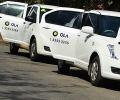
Predatory pricing petitions against Ola, Uber were filed from across cities.

Japanese conglomerate SoftBank Group on Wednesday said it has recorded loss from investments to the tune of USD 1.4 billion, or over Rs 9,000 crore, for 2016-17 in Indian startups like Snapdeal and Ola.
The government on Monday asked online food business operators like Swiggy and Zomato to submit a proposal within 15 days on improving their consumer grievance redressal mechanism amid rising complaints from customers. The department of consumer affairs directed e-commerce FBOs "to transparently show consumers the breakup of all charges included in the order amount such as delivery charges, packaging charges, taxes, surge pricing etc." According to an official statement, "The Department of Consumer Affairs has directed major e-commerce Food Business Operators (FBOs) to furnish the current framework as well as a proposal on improving the consumer grievance redressal mechanism within 15 days."

Koo -- the made-in-India rival of Twitter -- will not charge users for a verification badge, its co-founder and CEO Aprameya Radhakrishna said as he took on the larger rival for allegedly first creating bots and now charging users for verification. Koo, which allows users to express views in Indian languages, has already crossed 50 million downloads and is now flying into the rival's nest, starting a campaign on Twitter by making itself prominently visible on verified handles and offering them better deals on its platform at no cost. Since taking over Twitter, billionaire Elon Musk has set in motion massive changes, sacking employees and talking of levying a $8 charge for 'verified' handles.

Online cab network company Ola has launched the 'Road to Gold' campaign under which its customers can contribute a sum of Re.1 per ride across the over 110 cities it operates in, a press release stated.

Flipkart's appointment of Kalyan Krishnamurthy as CEO and Ola's choice of PepsiCo's Vishal Kaul for COO speaks to the growing trend of bringing in experienced professionals to run business. Karan Choudhury reports.

With Uber & Ola fighting it out, the taxi aggregator space is set for massive growth.

Foodpanda delivery executives were assured they could make Rs 50,000. There were promises made on surge and demand. But the demand never kept up with the supply.
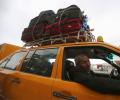
Ola's cash reserves are starting to run dry. The company was in talks to raise $1 billion in funding by the end of July, but no announcement has been made as yet

Rediff readers share their experience about taxis and autorickshaws in India.

The drying up of funds for a number of start-ups is affecting the firms' unicorn status across the globe. The past six months have seen the valuations of 147 unicorns drop, of which 71 were from the US and 29 from China, according to the latest Hurun Global Unicorn Index 2022. Eighty-one unicorns from across the globe saw their valuations drop below $1 billion-the threshold for a start-up to be labelled unicorn-from last year.

Gig workers are usually spoken of in the context of the sharing economy, like Uber, Ola drivers, delivery persons for Zomato and Swiggy and so on. This is the first time such workers will be covered under India's social security law.

Mahindra launches e-mobility platform 'Glyd' to take on Ola, Uber. Targeted at office-going executives, it offers web-conferencing, curated entertainment and music content from selective partners.

Uber is locked in an intense battle with market leader Ola, which counts Didi as an investor.

Both are finding it difficult to sell one each of their plants -- Chennai Maraimalai Nagar (Ford) and Talegaon near Pune (GM) -- and are finding the road blocked by employee severance snarl-ups, report Sohini Das and Shine Jacob.

Recently, TPEM's first born electric concept, Avinya broke cover. The model promises a minimum range of 500 kilometres and advanced technology features, aimed at buyers in India and outside. TPEM, the newly formed entity may also consider a separate dedicated sales channel for the EVs with a distinctive corporate identity once the volumes reach a critical mass and throughput is large enough for the dealers to be profitable, said Chandra. Elaborating further on the hiring strategy he said, "We will hire from everywhere-wherever the talent of the required competency is available."

Japanese tech investor SoftBank may end up investing around $1 billion in India in 2022, nearly a third of what it did last year, according to people closely tracking its plans. Last year, SoftBank undertook investments of $3.2 billion in 12 deals. In the first five months of CY22, the giant investor has invested $400-500 million in five deals.

Even as the semiconductor shortage has limited the demand for new cars, the pre-owned car segment is seeing a surge. A preference for personal mobility, availability of multiple organised online platforms, including e-commerce channels, aggregators, and classifieds, have been fuelling growth. The growth rate of the pre-owned car market is expected to be 1.5x that of the new car market over the next five years.
Its executives are test-marketing the model in New Delhi.

Hyundai, which is also toeing Maruti's lines, said special schemes are offered to engage the cab aggregators, including annual-maintenance-contract packages and extended warranty.

Uber would look to expand the service to six Indian cities

HR Guru Mayank Rautela offers practical advice.

This and more from the happenings in the world of football
It was investing heavily in finding new ways to gauge driver behaviour apart from just relying on feedback provided by riders.
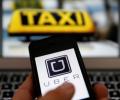
With the deal closing, SoftBank becomes an investor in two of India's largest on-demand cab service -- Uber and Ola.

The Ola Money and Uber tie-ups demonstrate how insurance companies, including even government-run ones, are forging partnerships with every possible service company to offer products.
According to experts, this will have major impact on new investments by Chinese players in companies, such as Paytm, Ola, BigBasket, Byju's, Dream11, MakeMyTrip, and Swiggy, when they go for follow-up funding. Chinese investors, such as Alibaba, Tencent, and Xiaomi, are active in the Indian start-up space, and have collectively invested billions of dollars.
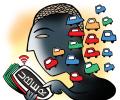
The Indian arm is the second largest unit for the company, crosses 500 mn trips milestone

Housing.com CEO takes a dig at Vishal Sikka.
Uber says it is engaging with state govt to explain why its business model encourages savings for customers.

Modi will get the maximum chunk of the session time.

Hari Narayanan shares his experience of travelling by an Uber auto to Coimbatore airport.

The cloud kitchen market in India will hit $1.05 billion by 2023. Just 13% of the total market has been utilised so far.

Under the ambit of probe is how former exec Eric Alexander obtained medical records of woman who was raped by an Uber driver in Delhi in 2014

The $306-million investment in Ola Electric Mobility by SoftBank Corp, Arun Sarin Family, Ratan Tata and Matrix has been the biggest funding in this space in value terms this year.

State transport commissioner Shyam Wardhane has issued directives allowing private cars, buses and other vehicles to operate as "public transport" on Monday

Data from market research agency Nielsen shows that 152 new players entered the hygiene market in March as the lockdown was implemented to contain the spread of the coronavirus disease. The trend is expected to continue, the agency says, as hygiene and health emerge as key themes.

The 'buy-now, pay-later' (BNPL) juggernaut continued to roll on during the festive season with multiple players seeing disbursals grow by more than 100 per cent compared to Diwali last year. LazyPay, the BNPL platform of Prosus-owned payments major PayU, witnessed a credit demand increase of 300 per cent over the festive season last year, especially in segments like travel, food & beverages and entertainment. "We also saw an uptick of 70 per cent in user acquisition in the last two months.

The Code on Social Security, 2020 gives a lot of comfort to gig firms which recognise cab drivers or food delivery executives as 'independent contractors' who directly do business with customers with the help of their digitised platforms.
 © 2026 Rediff.com - Advertise with us - Disclaimer - Privacy Policy - Sitemap - Feedback - About us - Terms of use - Grievances